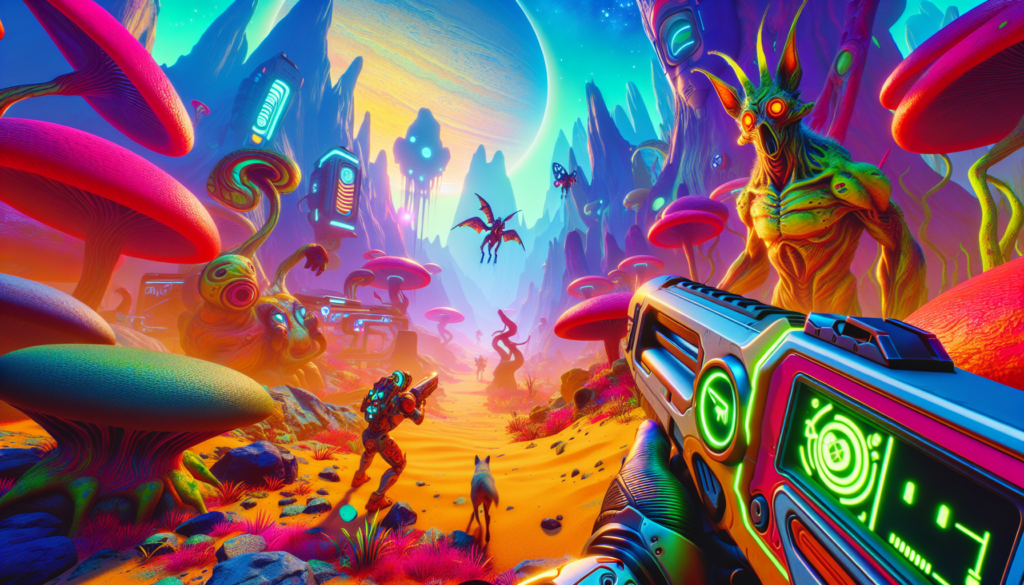
Squanch Games returns to the absurdist sci-fi universe that turned heads in 2022 with High on Life 2, the sequel to Justin Roiland’s controversial comedy shooter. Available on Xbox Series X/S, PlayStation 5, and PC, this follow-up attempts to address criticisms of the original while doubling down on the signature humor that made the first game a divisive cult hit. The result is a game that improves significantly on gameplay fundamentals while remaining trapped in the comedic sensibilities that will either delight or repel potential players.
The sequel drops players back into a universe where aliens have discovered that humans produce the ultimate narcotic, leading to an intergalactic drug trade with humanity as the product. Once again, you take on the role of a bounty hunter armed with sentient weapons, each possessing distinct personalities and dialogue that comment on your actions throughout the adventure. The narrative setup provides ample opportunity for the rapid-fire comedy that defines the experience.
Gameplay evolution represents the most significant improvement over the original. Where the first High on Life often felt like a walking simulator punctuated by occasional shooting galleries, the sequel embraces more robust FPS mechanics. Gunplay feels tighter and more responsive, with weapon variety offering genuine strategic choices during encounters. The sentient weapons provide not just commentary but meaningful combat differences, from rapid-fire pistols to more exotic alien technology that changes engagement approaches.
Level design shows marked improvement, offering more verticality and exploration opportunities than the relatively flat environments of the predecessor. Hidden areas reward thorough investigation, while the art direction continues to showcase the distinctive visual style that merges cartoon aesthetics with sci-fi horror elements. The absurdist alien worlds burst with visual creativity, creating environments that remain interesting to explore even when the humor misses its mark.
The comedy, however, remains the defining factor that will determine player enjoyment. High on Life 2 embraces the Rick and Morty style of humor—rapid-fire, self-aware, and deliberately immature. Characters break the fourth wall constantly, acknowledge video game tropes, and deliver mile-a-minute dialogue that sometimes feels like being trapped in a room with someone who cannot stop talking. This approach generated significant criticism of the original game, and the sequel makes no attempt to broaden its comedic appeal.
Developer: Squanch Games
Platforms: Xbox Series X/S, PlayStation 5, PC
Genre: First-Person Shooter / Comedy Adventure
Release Date: February 2025
Metacritic Score: 74/100
OpenCritic Score: 76/100
Approximate Length: 12-15 hours main campaign
- Significantly improved gunplay and combat mechanics
- More varied and interesting level design
- Distinctive visual style and art direction
- Sentient weapons provide unique gameplay twists
- Better pacing with more gameplay-focused sections
- Technical issues and bugs at launch
- Humor remains divisive and potentially grating
- Comedy frequently stops gameplay momentum
- Occasional performance problems
- Narrative stakes feel low despite premise
The voice acting deserves particular mention for its commitment to the comedic vision, even when that vision may not align with player tastes. The sentient weapons chatter constantly, providing running commentary that occasionally hits genuinely funny observations about gaming conventions but just as often delivers exhausting, rambling monologues. Players who found the first game’s humor tiresome will find no relief here—the sequel if anything increases the dialogue density.
Technical performance has emerged as a significant concern since launch. Players across all platforms have reported various bugs ranging from minor visual glitches to more serious progression-blocking issues. While day-one patches have addressed some problems, the release state suggests a game that needed additional development time. These technical hiccups particularly undermine the comedic timing when dialogue cuts out or animations fail to trigger properly.
The game’s structure alternates between combat encounters, exploration segments, and extended comedy sequences where gameplay pauses entirely for scripted events. This latter element proves most divisive—some players appreciate the commitment to character moments and world-building, while others find themselves impatiently waiting for control to return. The ratio feels slightly improved from the original, with more opportunities for active gameplay between story beats.
| Feature | High on Life 2 | High on Life (2022) | Borderlands 3 |
|---|---|---|---|
| Combat Depth | Improved mechanics | Basic shooting | Complex RPG systems |
| Comedy Style | Roiland rapid-fire | Similar approach | Diverse character humor |
| Level Design | More verticality | Flat corridors | Open world zones |
| Technical Stability | Buggy at launch | Relatively stable | Polished release |
| Voice Acting Density | Extremely high | Very high | Moderate |
Multiplayer elements remain limited, focusing primarily on the single-player experience. This design choice makes sense given the narrative-heavy approach, though some cooperative functionality might have extended replayability. As presented, the game offers limited incentives for multiple playthroughs beyond experiencing alternative dialogue choices or hunting for missed collectibles.
The progression system provides satisfying weapon upgrades and ability unlocks that meaningfully change combat possibilities. This represents a significant step forward from the original, where upgrades often felt cosmetic rather than transformative. Players who engage with the upgrade systems will find combat encounters becoming more dynamic and interesting as new capabilities unlock.
For players who enjoyed the original High on Life, the sequel delivers exactly what they would expect—more of the same humor with improved gameplay foundations. The technical issues are unfortunate but not game-breaking for most players. Those who found the first game’s comedy exhausting or immature will find no redemption here; if anything, the sequel commits harder to its distinctive voice.
The cultural conversation around the game reflects broader discussions about comedy in gaming and the legacy of Rick and Morty’s influence on video game writing. High on Life 2 functions almost as a litmus test for player tolerance for meta-humor and fourth-wall breaking. Those who appreciate constant self-aware commentary will find a game tailored specifically to their preferences; everyone else may find the experience grating despite gameplay improvements.
In conclusion, High on Life 2 stands as a superior game to its predecessor in mechanical terms while remaining equally divisive in its creative approach. The improved combat, better level design, and more consistent pacing create a foundation that supports the controversial comedy rather than being overshadowed by it. Players know exactly what they’re getting with this sequel, for better or worse, making it an easy recommendation for fans and a simple pass for those who bounced off the original.

Leave a Reply