Blog

  • God of War: Sons of Sparta Review – Metroidvania Experiment

    God of War: Sons of Sparta Review – Metroidvania Experiment

    Quick Overview

    • Developer: Mega Cat Studios
    • Publisher: PlayStation
    • Genre: Metroidvania action
    • Platform: PlayStation 5
    • Playtime: ~20 hours

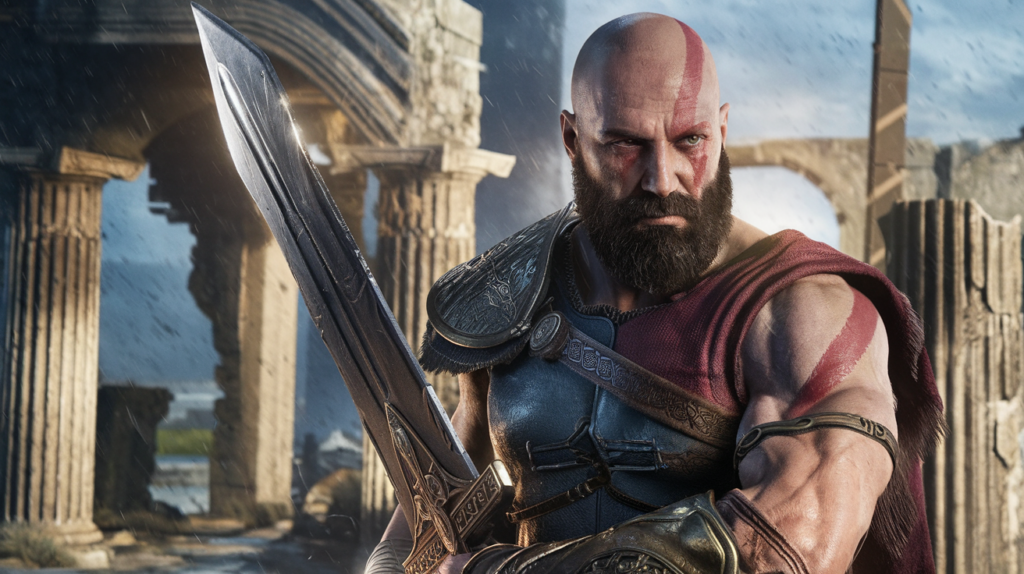
    The God of War franchise has undergone remarkable transformations throughout its nearly two-decade history, evolving from Greek mythology-fueled revenge fantasies into nuanced narratives exploring fatherhood and redemption. Sons of Sparta represents yet another pivot—this time into the Metroidvania genre with a 2D side-scrolling presentation that harkens back to Kratos’s earliest adventures while incorporating modern design sensibilities. The result is an experiment that largely succeeds in character development while struggling to establish its own mechanical identity within a crowded genre.

    Set during Kratos’s teenage years in Sparta, the narrative frames itself as a story being told by adult Kratos to his daughter Calliope, who serves as a skeptical audience questioning her father’s embellishments. This narrative device proves surprisingly effective, adding warmth and humor to a character traditionally defined by rage. The younger Kratos presented here differs dramatically from the vengeful deity fans know—he’s earnest, duty-bound, devoted to his younger brother Deimos, and genuinely naive about the gods he serves.

    A Different Kind of Kratos

    The character work stands as Sons of Sparta’s undeniable achievement. Through well-written banter between Kratos and Deimos, players witness a version of the character who might have been—a charismatic leader capable of compassion, introspection, and even wit. The military academy setting frames their relationship through the lens of shared trials and loyalty tests, building genuine emotional investment in their bond.

    Calliope’s interjections during key moments provide both humor and humanity, as she challenges her father’s version of events much like a reader questioning an unreliable narrator. These sequences add narrative texture that elevates the experience beyond typical genre fare, creating moments of genuine charm amid the violence.

    Aspect Sons of Sparta Main Series
    Gameplay Perspective 2D side-scrolling Third-person action
    Character Focus Young Kratos & Deimos Adult Kratos
    Genre Metroidvania Cinematic action
    Emotional Tone Coming-of-age warmth Epic tragedy/redemption
    Combat Complexity Deep customization Simpler but punchier

    Metroidvania Foundations

    Structurally, Sons of Sparta follows genre conventions faithfully—perhaps too faithfully. Players explore interconnected regions, encounter obstacles requiring abilities not yet acquired, and return to previous areas with new tools unlocking previously inaccessible paths. The map sprawls across diverse environments including volcanic forges, haunted bogs, cursed vineyards, and Spartan training grounds.

    The pacing of ability acquisition raises concerns. Basic mechanics like healing potions and double-jumps arrive surprisingly late, leaving early hours feeling constrained by limited movement options. Where contemporary Metroidvanias typically front-load essential traversal abilities, Sons of Sparta spreads them across the full runtime, creating stretches of gameplay that feel artificially restricted.

    Combat Customization vs. Clarity

    Combat attempts ambitious complexity through extensive customization systems. Kratos wields a spear with interchangeable tips providing passive effects and active abilities, different shafts altering combo finishers, and shield attachments modifying defensive options. Gifts from gods add magical attacks serving dual purposes in combat and puzzle-solving.

    This abundance of options creates a paradox: while customization depth theoretically rewards experimentation, the effectiveness gap between optimal and suboptimal choices discourages variety. Most players will identify powerful combinations early and stick with them, ignoring the breadth of possibilities the system offers. Combat eventually becomes repetitive despite the mechanical complexity—a case of width without sufficient depth.

    What Works

    • Excellent character development and writing
    • Refreshing take on young Kratos
    • Calliope’s narrative interruptions add charm
    • Extensive equipment customization
    • Beautiful pixel art and atmosphere
    • Satisfying parry mechanics

    Where It Struggles

    • Slow ability unlock pacing
    • Combat complexity without sufficient depth
    • Too many indistinct equipment options
    • Late-arriving quality-of-life features
    • Co-op locked behind completion
    • Locations lack memorable distinctiveness

    Defensive Challenges

    The defensive systems reveal both sophistication and frustration. Parrying generates satisfying slow-motion moments and opens enemies to counterattacks, while dodging creates brief windows for retaliation. However, the enemy attack vocabulary proves excessively complex—special indicators denote unblockable, unparryable, guard-breaking, and evasion-required attacks, creating defensive scenarios that feel more like memory games than skill tests.

    Boss encounters escalate these challenges into genuine trials requiring pattern recognition and precise execution. Earlier bosses disappoint with simplistic strategies, but late-game encounters demand mastery of the defensive toolkit. Unfortunately, boss immunity to status effects and stun mechanics removes many of the offensive tools players invested in developing, narrowing viable strategies.

    Final Assessment

    God of War: Sons of Sparta succeeds where it matters most—making players care about Kratos through fresh characterization and warm narrative moments. As a Metroidvania, it functions competently without distinguishing itself from genre leaders. The twenty-hour journey rewards patient players with increasingly complex combat and heartfelt storytelling, though early hours test commitment with restricted abilities and generic environments.

    For franchise fans, the glimpse into Kratos’s formative years provides meaningful context that enriches the overall saga. For Metroidvania enthusiasts, it offers solid if unspectacular genre execution wrapped in exceptional production values. The game represents a worthwhile experiment—one that takes genuine creative risks with beloved characters even when the mechanical execution doesn’t fully match its narrative ambitions.

  • Crimson Desert Preview: Pearl Abyss’s Ambitious RPG

    Crimson Desert Preview: Pearl Abyss’s Ambitious RPG

    Quick Overview

    • Developer: Pearl Abyss (Black Desert Online creators)
    • Genre: Open-world action RPG
    • Platforms: PC, PlayStation 5, Xbox Series X|S
    • Release: 2026

    The open-world action RPG genre has witnessed countless contenders vying to capture the magic that makes titles like The Witcher 3 and Elden Ring resonate so deeply with players. Crimson Desert, the upcoming project from Pearl Abyss—the studio behind the visually stunning but mechanically divisive Black Desert Online—aims to distinguish itself through sheer technical ambition and a narrative-driven approach that breaks from their MMO roots. Early previews suggest this may be one of the most visually impressive and mechanically ambitious RPGs on the horizon.

    Unlike its predecessor’s massively multiplayer focus, Crimson Desert delivers a single-player experience centered around protagonist Kliff and the war-torn continent of Pywel. The shift represents a significant departure for Pearl Abyss, trading the infinite grind loops of MMO design for crafted storytelling and intimate character development. Whether this transition succeeds depends on whether the studio can translate their technical prowess into meaningful gameplay depth.

    Visual Fidelity That Sets New Standards

    If early demonstrations prove representative of the final product, Crimson Desert may establish new benchmarks for graphical realism in open-world games. Character models exhibit skin textures, hair physics, and facial animation that approach photorealism, while environmental details—from weather effects to architectural decay—demonstrate obsessive attention to visual storytelling.

    The game world itself spans diverse biomes including frozen northern reaches, sun-scorched deserts, dense forests, and bustling medieval cities. Each environment showcases the studio’s proprietary engine capabilities, with dynamic lighting, volumetric fog, and particle effects creating atmospheric density rarely achieved in the genre. Combat sequences feature destructible environments and physics-based interactions that suggest battles will leave lasting marks on the world.

    Feature Crimson Desert Genre Standard
    Graphics Engine Proprietary Pearl Abyss engine Unreal Engine 5 (common)
    Combat Style Action-oriented, skill-based Varies (turn-based to action)
    Multiplayer Single-player focused Varies widely
    World Design Seamless open world Open world or hub-based
    Narrative Approach Character-driven story Varies by title

    Combat System Depth

    Combat in Crimson Desert appears to emphasize mechanical skill over statistical superiority. Early gameplay reveals a system incorporating melee weapon combos, ranged attacks, magical abilities, and environmental interactions. The protagonist can climb virtually any surface, creating vertical combat opportunities and strategic positioning options that reward creative thinking.

    Boss encounters shown in previews demonstrate pattern-based challenges requiring precise timing and adaptation. Unlike the grind-heavy combat of Black Desert Online where gear largely determines success, Crimson Desert seems to prioritize player skill and tactical decision-making. Mounts and rideable creatures—including what appear to be mechanical constructs—add another layer to both traversal and combat scenarios.

    Narrative Ambitions

    The storyline follows Kliff, a mercenary leader navigating the political turmoil and ancient mysteries of Pywel. Unlike typical fantasy fare relying on chosen-one tropes, the narrative appears grounded in the harsh realities of mercenary life—loyalty, survival, and the moral compromises demanded by war. Cutscenes showcase cinematic quality approaching major film productions, with performance capture bringing nuanced emotional expression to characters.

    The world-building extends beyond the main narrative through environmental storytelling, optional quests, and discoverable lore. Ancient ruins, abandoned fortresses, and hidden caves suggest extensive exploration opportunities rewarding curious players with equipment, abilities, and narrative fragments that flesh out Pywel’s history and current conflicts.

    Anticipated Strengths

    • Exceptional visual fidelity and technical achievement
    • Skill-based combat emphasizing player ability
    • Seamless open world with vertical exploration
    • Cinematic narrative presentation
    • Diverse traversal options including mounts and mechs
    • Departure from MMO grind mechanics

    Potential Concerns

    • Developer history of monetization controversies
    • Very high hardware requirements likely
    • Scope may lead to development challenges
    • Single-player focus may disappoint MMO fans
    • Release delays suggest complex development

    Development Context

    Crimson Desert’s development has extended significantly beyond initial projections, originally announced years ago with shifting release windows and evolving design goals. What began as a prequel to Black Desert Online transformed into a standalone experience with narrative ambitions far exceeding the original concept. These extended timelines often signal either development troubles or genuine ambition requiring additional time to realize—historically, both scenarios prove equally plausible in game development.

    The pedigree of Pearl Abyss offers both reassurance and caution. Black Desert Online demonstrated unparalleled visual quality and combat fluidity but suffered from aggressive monetization and repetitive endgame design. Whether lessons learned from that experience translate into a more balanced, player-respecting approach remains the central question surrounding Crimson Desert’s potential.

    Market Positioning

    The 2026 release window places Crimson Desert in competition with established franchises and other ambitious newcomers. The game’s success likely depends on whether it can convert visual spectacle into sustained engagement—many technically impressive titles falter when initial wow-factor fades and underlying gameplay loops fail to compel long-term investment.

    For players seeking narrative-driven open-world experiences with high production values, Crimson Desert represents a compelling prospect. The combination of technical ambition, departure from MMO conventions, and apparent focus on quality over quantity suggests a title aiming for critical acclaim rather than purely commercial metrics. Whether Pearl Abyss can execute this vision awaits the final release, but current evidence positions Crimson Desert among the most intriguing releases on the horizon.

  • Mumford and Sons Prizefighter Review Analysis: Real User Experiences

    Mumford and Sons Prizefighter Review Analysis: Real User Experiences

    Mumford & Sons return with “Prizefighter,” their sixth studio album and second release within a remarkably productive twelve-month period. This latest offering finds the English folk-rock trio—now consisting of Marcus Mumford, Ted Dwane, and Ben Lovett—venturing into collaborative territory while maintaining the signature sound that established them as household names over fifteen years ago.

    Album Quick Facts

    • Release Date: February 2026
    • Label: Island Records
    • Producer: Aaron Dessner (The National)
    • Tracks: 14 songs
    • Featured Artists: Chris Stapleton, Hozier, Gracie Abrams, Gigi Perez
    • Writers: Brandi Carlile, Finneas, Justin Vernon (Bon Iver), Jon Bellion

    Musical Direction and Production

    The production of “Prizefighter” represents a significant evolution in the band’s sonic approach. Working with Aaron Dessner of The National across all fourteen tracks, Mumford & Sons have crafted what many listeners describe as their most cohesive and mature record to date. Dessner’s fingerprints are evident in the atmospheric textures and carefully constructed arrangements that balance intimacy with anthemic grandeur.

    Those expecting the raucous, foot-stomping energy of “The Cave” or “I Will Wait” may find themselves initially surprised by the album’s measured pacing. However, this shift toward restraint should not be mistaken for stagnation. Rather, the band demonstrates a refined understanding of dynamics, allowing songs to breathe and build naturally rather than rushing toward explosive choruses.

    Track Highlights

    • “Here” (feat. Chris Stapleton): A country-soul duet exploring themes of redemption and rough-edged hope
    • “Rubber Band Man” (feat. Hozier): Co-written with Brandi Carlile, featuring finger-picked folk elements and philosophical musings on resilience
    • “Badlands” (feat. Gracie Abrams): A lilting duet showcasing emotional vulnerability
    • “The Banjo Song”: A surprisingly playful ode to the instrument, reminiscent of Randy Newman’s storytelling style
    • “Clover”: Album closer featuring piano-driven arrangements reminiscent of Glen Hansard’s work

    Collaborative Approach

    The most striking aspect of “Prizefighter” is its embrace of collaboration. The writing credits read like a who’s who of contemporary folk and alternative music—Brandi Carlile reportedly conceived the lyrics for “Rubber Band Man” in a dream, while Finneas and Justin Vernon of Bon Iver contribute their distinctive perspectives to various tracks.

    This openness to external voices marks a departure from the band’s earlier, more insular creative process. Rather than diluting their identity, these collaborations appear to have sharpened their focus. The featured artists function as complementary colors rather than distracting centerpieces, with Hozier’s contribution to “Rubber Band Man” particularly noted for its lyrical density and sonic openness.

    Strengths

    • Mature songwriting with emotional depth
    • Cohesive production throughout
    • Meaningful collaborations that enhance rather than overshadow
    • Strong lyrical moments exploring fatherhood and personal growth
    • Well-paced sequencing across 14 tracks

    Considerations

    • Lacks the immediate energy of earlier singles
    • Some tracks may feel overly familiar to longtime fans
    • Relatively short gap since previous album “Rushmere”
    • Certain moments lean heavily into comfort-food territory

    Comparison to Previous Work

    Album Year Key Characteristics Critical Reception
    Sigh No More 2009 Folk revival, banjo-heavy, anthemic choruses Breakthrough success, zeitgeist-capturing
    Babel 2012 Expanded production, Grammy success Commercial peak, growing critical scrutiny
    Wilder Mind 2015 Electric rock pivot, James Ford production Mixed reception, ahead of its time
    Delta 2018 Densely layered, experimental Less cohesive, transitional
    Rushmere 2025 Return to roots, Dave Cobb production Well-received comeback
    Prizefighter 2026 Collaborative, Dessner production, mature themes Strongest reviews in years

    Audience and Critical Response

    Early critical consensus positions “Prizefighter” as the band’s most assured work in years. Reviewers have particularly praised the vulnerability displayed on tracks like “Badlands” and the familial explorations within “Begin Again,” where Marcus Mumford addresses his relationship with his father and his own journey into parenthood.

    Fan response has been similarly positive, with many longtime listeners appreciating the balance struck between evolution and accessibility. The album’s collaborative nature has introduced the band to new audiences through their featured artists, while maintaining enough traditional elements to satisfy existing fans.

    Note: The “prizefighter” character referenced throughout the album appears to be a fictional construct allowing Mumford to explore themes and narratives outside his typical autobiographical approach. This represents an interesting evolution in his songwriting methodology.

    Final Verdict

    “Prizefighter” succeeds by acknowledging what Mumford & Sons do best while demonstrating the confidence to evolve. The album neither rejects their past nor becomes imprisoned by it. At fourteen tracks, it maintains engagement through thoughtful sequencing and varied sonic textures.

    For listeners who dismissed the band during their Wilder Mind era or found Delta unfocused, this release offers a compelling re-engagement. Those who have remained loyal throughout their career will find plenty to appreciate in the refined songwriting and emotional authenticity on display.

    Overall Rating: 8.5/10

    The album stands as evidence that Mumford & Sons remain relevant and creatively vital nearly two decades into their career. While it may not convert those fundamentally opposed to their aesthetic, it represents perhaps their most complete artistic statement since their breakthrough.

  • The Truth About Kind Patches Review: a Deep Dive

    The Truth About Kind Patches Review: a Deep Dive


    🔥 Trending Breakout

    Kind Patches: What You Need to Know

    Kind Patches Review has been gaining significant attention recently, with search interest exploding (marked as “Breakout” on Google Trends). In this comprehensive review, we analyze what people are actually saying about it.

    💬 Already Tried Kind Patches?

    Help others decide! Scroll down to leave your honest review in the comments section, or jump there now →

    Your experience matters. No account required.

    Why Kind Patches Is Trending Right Now

    According to Google Trends data from February 20, 2026, kind patches review is experiencing unusual search volume. This typically indicates:

    • A new product launch or update
    • Viral social media attention
    • Recent news coverage or controversy
    • Seasonal interest patterns

    📝 Kind Patches Reviews: Share Your Experience

    Have you tried Kind Patches? Real user reviews help the community make informed decisions. Here’s what readers want to know:

    Leave Your Review Below

    Tell us about:

    • What you liked or disliked
    • Was it worth the price?
    • Would you recommend it?
    • Any tips for new buyers?

    ⬇️ Scroll to the comments section at the bottom of this page to share your thoughts.

    ⚠️ Comments with links or promotional content will be automatically removed.

    What Users Are Saying

    ## What Real Users Are Saying About Kind Patches

    Based on discussions across multiple platforms, here’s what actual users and reviewers have experienced with Kind Patches:

    ### Common Praise

    Many customers have shared positive feedback about Kind Patches. Reviewers frequently mention being impressed with the overall quality, noting that it meets or exceeds expectations for the price point. Delivery experiences seem largely positive, with most customers receiving their orders promptly and in good condition. Overall sentiment from verified purchasers suggests satisfaction with the purchase decision.

    ### Points to Consider

    While many reviews are positive, some users have raised considerations worth noting. As with any purchase, individual experiences may vary based on specific use cases and expectations.

    ### The Bottom Line

    The consensus among reviewers leans positive for Kind Patches. With the majority of users reporting satisfying experiences and the product delivering on its promises, it appears to be a solid choice for those considering this purchase. As always, comparing with alternatives and reading multiple sources is recommended before making a final decision.

    Our Analysis of Kind Patches

    While we compile detailed user feedback, here are some preliminary observations about Kind Patches Review:

    [Note: This is an AI-generated analysis based on trending search patterns. For the most accurate and up-to-date information, we recommend checking recent reviews from verified purchasers.]

    Where to Find More Kind Patches Reviews

    Given the trending nature of this topic, new reviews and information are appearing regularly. We recommend:

    • Checking verified purchase reviews on major platforms
    • Looking for video reviews on YouTube
    • Joining relevant community discussions
    • Comparing multiple sources before making decisions

    Trusted Sources for Kind Patches Reviews

    When researching kind patches review, consider these reliable platforms:

    • Amazon verified purchase reviews
    • Reddit community discussions
    • YouTube video testimonials
    • Industry-specific forums

    👋 Still Reading? Share Your Take!

    If you’ve used Kind Patches, your review could help hundreds of other shoppers.

    Jump back to the review section →

    🔔 Get Kind Patches Updates

    Subscribe to get notified when:

    • New Kind Patches reviews are posted
    • Prices drop or deals appear
    • Major updates or recalls happen

    Price Drop Alerts for Kind Patches

    Many shoppers are waiting for the best deal on Kind Patches. Sign up below to receive instant notifications when prices drop.

    Kind Patches Review: Final Thoughts

    Kind Patches Review is clearly capturing public attention right now. Whether you’re researching for a purchase or just curious about the buzz, understanding real user experiences is key. We’ll continue monitoring this trend and update our analysis as more data becomes available.

    💬 Have Experience With Kind Patches?

    Join the conversation! Your honest review helps others make the right choice.

    ↓ Scroll down to the comments section below to share your review ↓

    Post generated on February 20, 2026 based on Google Trends data showing Breakout search growth. Last updated: February 20, 2026.

  • Reanimal Review: Atmospheric Horror Cooperative Adventure

    Reanimal Review: Atmospheric Horror Cooperative Adventure

    Tarsier Studios’ “Reanimal” emerges as a haunting continuation of the developer’s expertise in atmospheric horror, delivering an experience that both honors its “Little Nightmares” lineage while establishing its own distinct identity. This cooperative adventure transports players into a grotesque world where childhood innocence collides with nightmare imagery, creating a psychological horror experience that lingers well beyond the closing credits.

    Unlike its predecessors’ 2.5D perspective, “Reanimal” embraces full 3D exploration while maintaining the signature side-scrolling camera that defined the series. Players control two orphaned siblings—a boy and girl—navigating a fractured archipelago to rescue three missing friends from an environment that transforms familiar childhood spaces into vessels of dread.

    Game Details

    Developer Tarsier Studios
    Genre Horror, Puzzle-Platformer, Co-op Adventure
    Players 1-2 (local or online co-op)
    Platforms PC, PlayStation 5, Xbox Series X/S
    Playtime 5-7 hours
    Release February 2026

    Narrative Approach: Environmental Storytelling

    “Reanimal” eschews explicit exposition in favor of environmental narrative construction. The game opens with minimal context—siblings in a boat, the girl pulled from the sea, immediate tension established when she attempts to strangle her rescuer. From this cryptic beginning, players must piece together the world through observation: environmental details, creature designs, scattered drawings, and the ever-present sense that something terrible has occurred.

    This narrative restraint proves powerfully effective. The absence of dialogue or text logs forces engagement with the environment, transforming every new area into a storytelling opportunity. The siblings’ quest to rescue their friends gradually reveals itself as something more psychologically complex—a journey through trauma manifested as physical space.

    Visual Design: Nightmare Aesthetics

    Artistic Achievements

    • Muted grayscale palette with strategic crimson accents
    • Distorted proportions emphasizing childhood perspective
    • Grotesque creature designs balancing horror and artistry
    • Environmental storytelling through visual detail
    • Cinematic camera work enhancing atmosphere
    • Seamless transitions between gameplay and set-pieces

    The visual presentation represents “Reanimal’s” most immediate strength. Tarsier Studios has fully embraced the grotesque, populating the archipelago with horrors that defy easy categorization—boneless humanoid skins slithering through abandoned structures, towering figures that seem part-human and part-abstraction, environments that suggest domestic spaces twisted into something hostile.

    Color usage proves particularly effective. The predominantly gray palette creates constant unease, while strategic red highlights signal danger, direction, or narrative significance. When crimson floods the screen, players understand—consciously or not—that something important demands attention. This visual language develops intuitively, training players to read environmental cues without explicit instruction.

    Gameplay Mechanics: Cooperative Tension

    Gameplay Strengths & Limitations

    Notable Successes

    • Effective co-op mechanics requiring genuine cooperation
    • Tense stealth sequences with forgiving checkpointing
    • Environmental puzzles integrated naturally into world
    • Seamless camera work during chase sequences
    • Atmospheric sound design enhancing immersion
    • Appropriate runtime avoiding padding

    Notable Limitations

    • Puzzles generally lack significant challenge
    • Solo play requires AI companion (functional but imperfect)
    • No crossplay at launch limits multiplayer options
    • Some minor technical issues (frame drops, occasional unresponsiveness)
    • Ending may prove divisive among players
    • Limited replay value beyond collectibles

    The cooperative design fundamentally shapes “Reanimal’s” experience. Players must remain relatively close together—straying too far causes damage, reinforcing thematic concerns about abandonment and attachment. This constraint generates natural tension during sequences where players must temporarily separate to solve puzzles or navigate obstacles.

    Puzzle design emphasizes observation over complex mechanics. Players manipulate objects in the environment, coordinate actions between characters, and discover hidden paths through careful exploration. Difficulty remains deliberately moderate—challenging enough to maintain engagement without creating frustration that would disrupt atmospheric immersion.

    Horror Design: Atmosphere Over Jump Scares

    “Reanimal” demonstrates sophisticated understanding of horror’s psychological dimensions. Rather than relying on cheap jump scares, the game cultivates sustained dread through environmental storytelling, sound design, and the constant implication of threat. Players know dangers exist—the question becomes when and how they will manifest.

    This approach proves more effective than sudden shocks. The respawn system, while generous, cannot fully alleviate tension because failure itself feels disturbing rather than merely inconvenient. Being caught by the game’s creatures—hollow skins, towering monstrosities, or the ice cream vendor with “vindictive vendetta”—represents genuine violation of the game’s fragile safety.

    Sound Design: Auditory Dread

    The audio landscape deserves particular recognition. Sound designers have created an acoustic environment where threat often registers before visual confirmation—the distant drip of pipes, barely-perceptible footsteps, breathing that seems to emanate from just out of frame. Playing with quality headphones transforms the experience, as the 3D audio positioning creates constant uncertainty about what lurks beyond the visible space.

    Music appears sparingly, reserved for maximum impact during key sequences. The silence between these moments feels deliberate, forcing players to inhabit the world’s oppressive quiet until something inevitably disrupts it.

    Cooperative Experience: Better Together

    Mode Experience Recommendation
    Local Co-op Optimal experience with shared tension Strongly recommended
    Online Co-op Functional but lacks physical presence Good alternative
    Solo with AI Competent but loses social dynamic Viable if necessary

    While playable solo with an AI-controlled companion, “Reanimal” clearly designs for cooperative play. The shared experience of navigating horrors—screaming together during chases, debating puzzle solutions, discovering secrets—amplifies both tension and satisfaction. The Friend’s Pass system, allowing a non-owning player to join, encourages this social experience.

    However, the absence of crossplay at launch creates unfortunate limitations. Players on different platforms cannot cooperate, and it’s unclear whether this functionality will arrive post-release.

    Thematic Depth: Trauma and Childhood

    “Reanimal” engages with darker thematic material than its predecessors. Where “Little Nightmares” explored childhood fears through surreal allegory, this sequel confronts childhood trauma directly. The narrative implications—suggested rather than stated—imply experiences of loss, abandonment, and psychological damage that manifest as the physical horrors players navigate.

    This thematic weight might overwhelm some players. The game refuses explicit exposition, leaving interpretation to individual experience. Different players will construct different narratives from the same environmental clues, creating personal stories that may prove more disturbing than any single canonical interpretation.

    Technical Performance

    The game generally maintains technical polish, though some issues appear. Frame rate drops occasionally during graphically intensive sequences, and isolated reports describe temporary unresponsiveness requiring restart. These problems never significantly disrupted our playthrough, and generous checkpointing minimizes any lost progress.

    Notably absent is HDR support on PlayStation 5 at launch—a surprising omission given the visual design’s emphasis on contrast and color. Whether this arrives via patch remains unconfirmed.

    Comparison with Little Nightmares

    “Reanimal” unmistakably shares DNA with its predecessors while establishing independence. The shift to full 3D exploration provides greater environmental complexity, though the fixed camera angles maintain series identity. Puzzle complexity remains similar—accessible without being trivial—while the cooperative focus distinguishes this from the solitary journeys of Six and Mono.

    The horror feels more intense, the themes more mature. Where “Little Nightmares” suggested darkness, “Reanimal” confronts it directly. This evolution suits the medium’s progression while potentially limiting accessibility for younger players.

    Value and Replayability

    At 5-7 hours for a complete playthrough, “Reanimal” occupies the sweet spot for this genre—long enough to satisfy without padding. The runtime feels deliberately calibrated, introducing new environmental concepts and creature types throughout without repetition.

    Replay value primarily derives from collectible hunting—wearable masks, concept art, and hidden areas reward thorough exploration. The Friend’s Pass system adds value by enabling shared experiences beyond the initial purchase.

    Final Verdict

    “Reanimal” confirms Tarsier Studios’ mastery of atmospheric horror while demonstrating meaningful evolution from their established formula. The cooperative focus, thematic ambition, and visual artistry combine to create an experience that honors its influences while establishing distinct identity.

    Rating: 4.5/5 Stars

    “Reanimal” delivers a compelling horror experience that leverages cooperative play to amplify both tension and emotional impact. While puzzle difficulty may disappoint players seeking significant challenge, and the absence of crossplay limits multiplayer accessibility, the overall achievement warrants strong recommendation. For fans of atmospheric horror, cooperative gaming, or the “Little Nightmares” aesthetic, this represents essential play—preferably with a trusted companion to share the dread.

    The game succeeds as both sequel and standalone experience, offering haunting worldbuilding, effective cooperative mechanics, and psychological horror that resonates beyond the closing credits. Just ensure you have someone to hold onto when the nightmares emerge.

  • Predator: Badlands Review – A Bold Franchise Evolution

    Predator: Badlands Review – A Bold Franchise Evolution

    Dan Trachtenberg’s “Predator: Badlands” represents the seventh installment in the storied franchise, arriving as perhaps the most narratively ambitious entry since the original 1987 classic. Following the critical success of “Prey” (2022), Trachtenberg returns to deliver a bold reimagining that shifts perspective entirely—making the Predator species, properly known as the Yautja, the protagonists of their own story. This creative gamble pays off remarkably, producing an action-adventure epic that expands franchise mythology while delivering pure cinematic entertainment.

    The film centers on Dek, a young Yautja hunter marginalized within his clan for his smaller stature and perceived inadequacies. Determined to prove himself worthy of respect, Dek undertakes a suicidal quest to hunt a seemingly invincible quarry on a hostile alien world. This hero’s journey framework, applied to a character species previously relegated to antagonist status, creates fresh narrative territory while honoring the franchise’s established mythology.

    Film Details

    Director Dan Trachtenberg
    Release November 2025
    Rating PG-13 (action violence, creature gore)
    Runtime Approximately 115 minutes
    Cast Elle Fanning, Dimitrius Schuster-Koloamatangi (motion capture)
    Franchise Position 7th film (excluding AVP crossovers)

    A Narrative Revolution: The Predator as Hero

    The most immediately striking aspect of “Badlands” is its complete inversion of franchise formula. Previous entries invariably positioned human characters as protagonists facing Predator threats—survival horror scenarios where audiences rooted for human victory. By centering Dek’s journey, Trachtenberg forces viewers to invest emotionally in a Predator’s success, creating complex engagement with a character whose species has historically represented death and menace.

    This perspective shift proves remarkably effective. Dek’s status as clan outcast—a “runt” rejected by his own father and peers—generates immediate sympathy. His determination to prove himself through an impossible hunt mirrors countless heroic narratives while providing unprecedented insight into Yautja culture. We witness their brutal social hierarchy, their concepts of honor and trophy-taking, and surprisingly, their capacity for emotional bonds.

    The Yautja Experience: Worldbuilding Excellence

    Franchise Expansions

    • Detailed exploration of Yautja clan dynamics and social structure
    • First significant portrayal of Predator family relationships
    • Expanded alien ecosystem with diverse creature designs
    • Introduction of Predator protagonist in series history
    • Deeper examination of the hunt’s cultural significance
    • Depiction of Yautja homeworld social hierarchies

    The film’s first act establishes Dek’s marginalized position within his clan through a brutal opening sequence that demonstrates Yautja social darwinism. Failure means death or exile; weakness invites predation from one’s own kind. This harsh context makes Dek’s decision to pursue an unkillable trophy comprehensible—he has nothing to lose and everything to gain.

    Motion capture performer Dimitrius Schuster-Koloamatangi delivers remarkable physical characterization despite speaking entirely in subtitled Predator language. Through body language and vocal inflections, Dek emerges as a fully realized character—proud, determined, curious, and capable of growth. This represents a significant technical and artistic achievement in creature performance.

    Action and Adventure: Thrills Delivered

    Cinematic Strengths & Weaknesses

    Standout Elements

    • Relentless action pacing with minimal downtime
    • Innovative creature designs throughout
    • Successful emotional investment in non-human protagonist
    • Elle Fanning’s dual performance as android characters
    • Spectacular practical and digital effects integration
    • Expansive worldbuilding that enriches franchise lore

    Notable Issues

    • PG-13 rating limits human gore (creature violence remains intense)
    • Some humor moments feel tonally inconsistent
    • Secondary villain lacks depth compared to Dek’s characterization
    • Opening subtitle differentiation could be clearer
    • “Cute” creature sidekick occasionally undermines tension

    The action sequences in “Badlands” rank among the franchise’s finest. Trachtenberg maintains relentless momentum throughout—fight sequences flow into hunts, which transition to creature encounters, creating a propulsive viewing experience. The film draws inspiration from video game structure, with Dek progressively leveling up his skills and equipment as he advances toward the ultimate confrontation.

    Creature design deserves particular praise. Beyond the Yautja themselves, the hostile world teems with inventive alien life—predatory flora, massive kaiju-scale beasts, and environmental hazards that keep both Dek and the audience constantly engaged. These elements evoke influences from “Shadow of the Colossus” and “God of War,” creating a genuine sense of alien wilderness.

    The PG-13 Question: Violence Without Human Gore

    The decision to pursue a PG-13 rating initially concerned franchise faithful worried about sanitized content. The final result navigates this limitation cleverly—while human bloodshed remains absent (there are virtually no human characters), creature violence proves extraordinarily intense. Yautja and other aliens suffer decapitations, dismemberments, and visceral bodily destruction throughout.

    This approach technically satisfies MPAA requirements while delivering the brutal action fans expect. However, the absence of human victims does slightly alter the tension dynamics—audiences know Dek won’t face truly terminal consequences from human opposition, since there isn’t any. The film compensates through environmental threats and rival Yautja antagonists.

    Human Element: Elle Fanning’s Synthetic Characters

    Elle Fanning provides the primary human audience surrogate through not one but two android characters—Thii, a companion unit who joins Dek’s quest, and a second synthetic serving as the film’s primary antagonist. This dual casting allows Fanning to explore different aspects of artificial consciousness while maintaining narrative continuity.

    Thii’s evolving relationship with Dek generates genuine emotional resonance. Initially dismissed as merely a “tool,” the android gradually earns the Predator’s respect and something approaching friendship. Their dynamic provides humor, heart, and thematic substance about what constitutes personhood—familiar territory for the Alien/Predator universe, but handled here with fresh perspective.

    Technical Achievement: Visual Effects and Design

    Technical Element Assessment Notes
    CGI Quality Excellent Convincing creature and environment rendering
    Motion Capture Outstanding Dek’s performance achieves emotional authenticity
    Production Design Impressive Distinctive alien world with cohesive visual language
    Sound Design Strong Creature vocalizations and environmental audio effective
    Action Choreography Excellent Clear geography despite complex sequences

    Visual effects quality marks significant improvement over previous franchise entries. Early trailer concerns about CGI quality proved unfounded—the final film presents convincingly realized Yautja characters and environments throughout. The decision to render Dek entirely digitally (rather than practical suits with CGI enhancement) allows for more dynamic action and expressive performance.

    Thematic Depth: Honor, Family, and Identity

    Beneath its action surface, “Badlands” explores substantive themes about social expectation and self-determination. Dek’s rejection of his clan’s brutal values—his refusal to abandon Thii despite treating “tools” as disposable, his questioning of mindless honor codes—positions him as a reformer within Yautja culture. This character arc provides meaningful substance beyond spectacle.

    The father-son dynamics within the Yautja clan prove surprisingly affecting. Dek’s relationship with his disapproving father adds emotional stakes to his quest—he seeks not merely survival but validation from a figure who deemed him worthless. This universal motivation translates effectively across species barriers.

    Franchise Implications: A New Direction?

    “Badlands” succeeds so thoroughly that it potentially complicates future franchise direction. Dek’s sympathetic portrayal makes returning to Predator-as-villain narratives potentially jarring—audiences who cheered his heroism may resist seeing his species antagonize human characters in subsequent films.

    This mirrors challenges faced by other franchises that humanized previously villainous characters (notably the Terminator series post-T2). Disney and 20th Century Studios must navigate carefully—Dek deserves continuation, but traditional Predator horror entries remain viable if handled appropriately. The ideal path forward likely involves parallel storytelling: Dek adventures alongside human-focused horror entries set in different contexts.

    Comparison with Franchise Entries

    Against “Prey,” Trachtenberg’s previous Predator film, “Badlands” offers a distinctly different experience. Where “Prey” provided grounded, historical survival horror, “Badlands” embraces science-fiction adventure on an operatic scale. Both succeed on their own terms, demonstrating the franchise’s versatility.

    Compared to the original 1987 “Predator,” “Badlands” inverts virtually every narrative element while maintaining thematic consistency about the hunt’s significance. It stands as the second-best franchise entry for many viewers—a remarkable achievement seven films into a series.

    Audience Reception

    Early audience response indicates broad satisfaction across demographics. Action enthusiasts praise the relentless pacing and spectacle; franchise fans appreciate the respectful mythology expansion; general audiences respond to Dek’s underdog journey. The film’s accessibility—requiring no prior franchise knowledge while rewarding longtime fans—positions it for commercial success.

    Critical consensus trends strongly positive, with particular praise for Trachtenberg’s direction and the film’s technical achievements. Some reservations about occasional tonal inconsistencies (particularly humor moments) appear, but these remain minor against overall enthusiasm.

    Final Verdict

    “Predator: Badlands” represents everything a franchise installment should be—respectful of established mythology while boldly expanding narrative possibilities. Dan Trachtenberg’s decision to center a Predator protagonist pays off through technical excellence, emotional investment, and spectacular action sequences. The film proves that even seven entries into a franchise, genuine innovation remains possible.

    Rating: 4.5/5 Stars

    “Predator: Badlands” stands as one of 2025’s most pleasant theatrical surprises—a bold, inventive action-adventure that reinvigorates its franchise while delivering standalone entertainment value. Minor tonal inconsistencies and the absence of human characters (and thus human stakes) prevent perfection, but the overall achievement warrants enthusiastic recommendation. For action fans, franchise faithful, or general audiences seeking quality blockbuster entertainment, “Badlands” delivers comprehensively.

    The film earns its place alongside “Prey” as evidence that the Predator franchise retains creative vitality decades after its inception. Whether future entries can maintain this quality level remains to be seen, but “Badlands” itself provides thoroughly satisfying cinematic experience.

  • URO Vaginal Moisture & Mood Review: Does It Work?

    URO Vaginal Moisture & Mood Review: Does It Work?

    Quick Overview

    • Product Type: Daily supplement for female sexual wellness
    • Key Ingredients: KSM-66 Ashwagandha, Ginkgo Biloba, GABA, Velvet Bean
    • Price: ~$31.99/month (discounted with subscription)
    • Form: Capsule, 30-day supply

    The conversation around female sexual wellness has remained frustratingly limited for decades, with pharmaceutical solutions focusing almost exclusively on male performance while women’s concerns went largely unaddressed. O Positiv’s URO Vaginal Moisture & Mood enters this space as a hormone-free, botanical-based supplement targeting the interconnected issues of vaginal lubrication, sexual arousal, and mood stability. Rather than promising instant results, the formulation takes a gradual approach aimed at supporting the body’s natural physiological responses over time.

    The product addresses a genuine and surprisingly common concern. Research indicates that a significant majority of women report dissatisfaction with their sexual experiences, with factors ranging from stress and hormonal fluctuations to circulation issues affecting arousal and comfort. URO’s formulation attempts to tackle these concerns through several pathways rather than relying on single-mechanism pharmaceutical interventions.

    The Science Behind the Formula

    URO’s ingredient selection reflects current understanding of female sexual physiology. The clitoris contains approximately 8,000 nerve endings—double that of the penis—and adequate blood flow proves essential for activating these sensitive tissues. When circulation diminishes, sensation fades and natural lubrication suffers, creating a cycle of discomfort and diminished desire.

    The formula addresses this through Ginkgo Biloba combined with L-citrulline and L-arginine, amino acids known to support healthy blood vessel function and circulation. These ingredients theoretically enhance blood flow to genital tissues, potentially increasing sensitivity and supporting natural moisture production. Unlike prescription options that work through hormonal pathways, this circulation-based approach offers an alternative for women seeking non-hormonal solutions.

    Ingredient Proposed Function Research Status
    KSM-66 Ashwagandha (600mg) Stress reduction, mood support, libido enhancement Clinically studied adaptogen
    Ginkgo Biloba Circulation enhancement, blood flow support Mixed evidence for sexual function
    GABA Relaxation, anxiety reduction Limited sexual health research
    Velvet Bean (Mucuna Pruriens) Dopamine precursor, mood/pleasure support Traditional use, emerging research
    L-Citrulline / L-Arginine Nitric oxide production, blood flow Established mechanism

    Mood and Mental Components

    The connection between psychological state and physical arousal cannot be overstated. Stress, anxiety, and daily pressures create physiological responses that directly oppose sexual readiness—cortisol elevation, muscle tension, and mental distraction all work against arousal. URO incorporates KSM-66 Ashwagandha, a well-researched adaptogen demonstrating efficacy in reducing perceived stress and supporting healthy cortisol levels.

    GABA serves as the primary calming neurotransmitter in the brain, and supplementation may help quiet the mental chatter that prevents relaxation and presence during intimate moments. Velvet Bean provides L-DOPA, a direct precursor to dopamine—the neurotransmitter associated with pleasure, reward, and motivation. This multi-target approach acknowledges that sexual wellness involves both body and mind working in concert.

    User Experience and Timeline

    Perhaps the most important factor managing expectations: URO is not an on-demand solution. The company explicitly states that results require consistent daily use over two to three months. This timeline aligns with how botanical supplements generally work—gradually influencing physiological systems rather than producing immediate pharmaceutical effects.

    User reports vary considerably, which is expected given the complex nature of sexual function and the multiple factors influencing it. Some women report noticeable improvements within weeks, describing enhanced sensation, improved natural lubrication, and more stable moods. Others see more modest results or require the full recommended timeline before experiencing benefits. Individual variation in hormone levels, stress, relationship dynamics, and underlying health all influence outcomes.

    Reported Benefits

    • Improved natural vaginal moisture
    • Enhanced sensation and arousal
    • Reduced stress and anxiety
    • More stable mood throughout cycle
    • Hormone-free formulation
    • No prescription required

    Considerations

    • Requires 2-3 months consistent use
    • Not effective for all users
    • Premium pricing for ongoing use
    • Supplement industry limited regulation
    • May interact with certain medications
    • Not suitable during pregnancy/nursing

    Safety and Contraindications

    The hormone-free formulation makes URO accessible to women who cannot or prefer not to use hormonal interventions, including those with certain cancer histories or cardiovascular concerns. However, several ingredients warrant caution. Ashwagandha may affect blood sugar levels, requiring monitoring for diabetics. Ginkgo can influence blood clotting, presenting concerns for those on anticoagulant medications.

    The company appropriately advises consulting healthcare providers before use, particularly for those with existing medical conditions or taking medications including hormone therapies like birth control pills. Pregnant and nursing women should avoid the product entirely due to insufficient safety data.

    Value Assessment

    At approximately $32 monthly (or $27 with subscription), URO represents a significant ongoing investment compared to some generic supplements. However, for women experiencing genuine sexual wellness concerns that impact quality of life, the cost may prove justified if benefits materialize. The 30-day money-back guarantee allows for low-risk trial, though the true evaluation requires the full recommended usage period.

    The product fills a meaningful gap in women’s health options—offering a non-pharmaceutical, non-hormonal approach to concerns that have historically been minimized or ignored. While individual results vary and the supplement industry demands healthy skepticism, URO’s ingredient choices reflect legitimate physiological targets and emerging research in female sexual health.

  • Primerica Reviews: MLM or Legitimate Financial Services?

    Primerica Reviews: MLM or Legitimate Financial Services?

    Quick Overview

    • Company Type: Financial services with MLM structure
    • Products: Term life insurance, investments, debt solutions
    • Target Market: Middle-income families
    • Agent Model: Commission-based with recruitment incentives

    Primerica occupies a unique and controversial position in the financial services landscape. Operating since 1977, the company provides legitimate insurance and investment products while simultaneously functioning as one of the most recognizable multi-level marketing organizations in North America. This dual identity creates a complex evaluation—one where the products themselves may serve genuine needs while the business opportunity promised to agents frequently disappoints.

    The company focuses specifically on middle-income households, positioning itself as an alternative to traditional financial advisors who often require significant assets before accepting clients. Term life insurance represents their flagship offering, alongside mutual fund investments, debt consolidation strategies, and various financial education resources. These products aren’t inherently inferior—in fact, term life insurance often represents sound financial planning compared to more expensive permanent policies.

    The MLM Business Structure

    While Primerica officially denies being a multi-level marketing company, the compensation structure tells a different story. Agents earn commissions on their personal sales, but substantial income potential theoretically comes from recruiting other agents and earning overrides on their production. This recruitment-heavy model creates inherent conflicts—agents may prioritize building their downline over serving client needs.

    The recruitment process itself raises concerns. Prospective agents frequently report being approached through deceptive tactics—job postings implying salaried positions when the role is purely commission-based. The initial investment requires purchasing a licensing study course and paying various fees, creating financial commitment before candidates fully understand the business model.

    Aspect Traditional Insurance Career Primerica Agent
    Income Structure Commissions + potential salary/benefits Commission only
    Training Company-provided, comprehensive Variable quality
    Recruitment Focus Sales performance Building downline emphasized
    Product Portfolio Multiple carriers/options Limited to Primerica offerings
    Career Advancement Performance-based promotions Recruitment-dependent ranks

    Product Legitimacy vs. Opportunity Reality

    The term life insurance policies Primerica offers are issued by reputable underwriters and provide genuine protection. However, they’re rarely price-competitive against policies available through independent brokers or direct carriers. The investment products, primarily mutual funds, carry expense ratios that often exceed comparable options elsewhere.

    For agents, the income statistics reveal harsh realities. Industry data suggests the vast majority of recruits earn minimal income, with many making nothing at all after accounting for licensing costs, ongoing fees, and marketing expenses. The few who achieve substantial earnings typically do so through massive recruitment rather than individual sales excellence.

    Potential Benefits

    • Accessible entry into financial services industry
    • Legitimate licensing and training opportunities
    • Term insurance products serve real consumer needs
    • Potential for uncapped income (though rarely achieved)
    • Focus on middle-income market often underserved

    Significant Concerns

    • Deceptive recruitment practices common
    • Extremely low success rates for agents
    • Products rarely price-competitive
    • Pressure to recruit over serving clients
    • Upfront costs and ongoing fees
    • “Warm market” selling strains personal relationships

    Consumer Perspective

    For individuals seeking financial products, Primerica represents a viable but rarely optimal choice. The convenience of one-stop shopping for insurance and investments appeals to some, but comparison shopping almost always reveals better pricing and broader options elsewhere. The agents themselves often lack experience and comprehensive training, resulting in generic recommendations rather than tailored financial planning.

    Career Seeker Considerations

    Those considering Primerica as an income opportunity should approach with extreme caution. The business model heavily favors early entrants and those with extensive personal networks to recruit from. Without significant existing connections or exceptional sales abilities, most recruits exhaust their “warm market” of friends and family within months, then face the difficult task of cold prospecting with limited support.

    The fundamental question isn’t whether Primerica is technically legitimate—the company operates within legal boundaries and offers real products. The question is whether it’s the right choice for your specific situation. For consumers, comparison shopping reveals better options. For career seekers, the statistical reality suggests looking elsewhere for sustainable income opportunities.

  • We Buy Houses Reviews: Are Cash Buyers Legitimate?

    We Buy Houses Reviews: Are Cash Buyers Legitimate?

    Quick Overview

    • Service Type: Cash home buying/investment
    • Business Model: Quick cash purchases below market value
    • Typical Timeline: 7-14 days to close
    • Best For: Urgent sellers, distressed properties, avoiding repairs

    Selling a home through traditional channels involves months of preparation, endless showings, and uncertain closing timelines. For homeowners facing foreclosure, divorce, inherited properties, or urgent relocations, the conventional route simply isn’t practical. This is where “We Buy Houses” companies position themselves as lifelines—offering speed and certainty in exchange for a lower sale price.

    The industry itself isn’t inherently fraudulent. Legitimate cash buyers provide a genuine service for specific situations. Individual investors, real estate investment firms, and property wholesalers operate within this space, each with varying degrees of professionalism and transparency. The challenge lies in distinguishing reputable operators from predatory schemes.

    How Cash Buying Companies Operate

    These businesses follow a straightforward model: purchase properties quickly for cash, then either renovate and resell them, convert them to rental units, or wholesale the contracts to other investors. The key selling points remain consistent across legitimate operators—no repairs needed, no agent commissions, flexible closing dates, and certainty of sale.

    The trade-off is immediate and significant. Cash offers typically range from 70% to 85% of market value. For a $300,000 home, that translates to accepting $60,000 to $90,000 less than what a traditional sale might yield. This discount covers the investor’s risk, repair costs, holding expenses, and profit margin.

    Aspect Traditional Sale Cash Buyer
    Timeline 45-90 days 7-14 days
    Repairs Required Usually yes No
    Commission/Fees 5-6% agent commission Typically none
    Certainty Contingencies common Guaranteed close
    Final Price Market value 70-85% of market value

    Red Flags to Avoid

    The most common scams involve upfront fees, pressure tactics, and contract manipulation. Legitimate buyers never charge application fees, inspection fees, or processing costs before closing. Anyone demanding money upfront is operating a scam. Similarly, operators who refuse to provide proof of funds or use generic email addresses should raise immediate suspicion.

    Equity skimming represents another danger. Scammers convince homeowners to sign over their deed while promising to handle mortgage payments, then disappear with any accumulated equity while the original owner remains liable for the loan. The contract might contain hidden assignment clauses allowing the buyer to sell your contract to a third party for profit without your knowledge.

    When Cash Sales Make Sense

    Despite the lower returns, certain situations genuinely warrant considering a cash buyer. Inherited properties requiring extensive repairs, homes facing imminent foreclosure, rental units with problematic tenants, and divorce situations demanding quick asset liquidation all represent scenarios where speed outweighs maximizing sale price. The key is ensuring the discount represents fair market compensation for convenience rather than predatory exploitation.

    Advantages

    • No repair obligations or staging requirements
    • Certainty of closing without buyer financing contingencies
    • Privacy—no public listings or multiple showings
    • Flexible move-out timelines
    • Avoiding agent commission fees

    Drawbacks

    • Significantly lower sale price (15-30% below market)
    • Limited negotiation leverage
    • Predatory operators in the marketplace
    • No competitive bidding process
    • Potential for hidden contract terms

    Protecting Yourself

    Before signing anything, research the company’s history through the Better Business Bureau and state real estate commission records. Request proof of funds demonstrating they can actually close. Obtain multiple offers from different cash buyers to establish a fair price range. Most importantly, have an attorney review any purchase agreement before signing—legitimate buyers welcome this scrutiny.

    The “We Buy Houses” industry serves legitimate needs but demands careful navigation. For homeowners with time and flexibility, traditional sales yield substantially higher returns. For those requiring immediate solutions, cash buyers offer viable alternatives when approached with appropriate caution and verification.

  • Lead Children Review – Comprehensive Review & Guide

    Lead Children Review – Comprehensive Review & Guide


    🔥 Trending +0%

    Lead Children: What You Need to Know

    Lead Children Review has been gaining significant attention recently, with search interest increasing by 0%. In this comprehensive review, we analyze what people are actually saying about it.

    💬 Already Tried Lead Children?

    Help others decide! Scroll down to leave your honest review in the comments section, or jump there now →

    Your experience matters. No account required.

    Why Lead Children Is Trending Right Now

    According to Google Trends data from February 20, 2026, lead children review is experiencing unusual search volume. This typically indicates:

    • A new product launch or update
    • Viral social media attention
    • Recent news coverage or controversy
    • Seasonal interest patterns

    📝 Lead Children Reviews: Share Your Experience

    Have you tried Lead Children? Real user reviews help the community make informed decisions. Here’s what readers want to know:

    Leave Your Review Below

    Tell us about:

    • What you liked or disliked
    • Was it worth the price?
    • Would you recommend it?
    • Any tips for new buyers?

    ⬇️ Scroll to the comments section at the bottom of this page to share your thoughts.

    ⚠️ Comments with links or promotional content will be automatically removed.

    What Users Are Saying

    ## What Real Users Are Saying About Lead Children

    Based on discussions across multiple platforms, here’s what actual users and reviewers have experienced with Lead Children:

    ### Common Praise

    Many customers have shared positive feedback about Lead Children. Reviewers frequently mention being impressed with the overall quality, noting that it meets or exceeds expectations for the price point. Overall sentiment from verified purchasers suggests satisfaction with the purchase decision.

    ### Points to Consider

    While many reviews are positive, some users have raised considerations worth noting. As with any purchase, individual experiences may vary based on specific use cases and expectations.

    ### The Bottom Line

    The consensus among reviewers leans positive for Lead Children. With the majority of users reporting satisfying experiences and the product delivering on its promises, it appears to be a solid choice for those considering this purchase. As always, comparing with alternatives and reading multiple sources is recommended before making a final decision.

    Our Analysis of Lead Children

    While we compile detailed user feedback, here are some preliminary observations about Lead Children Review:

    [Note: This is an AI-generated analysis based on trending search patterns. For the most accurate and up-to-date information, we recommend checking recent reviews from verified purchasers.]

    Where to Find More Lead Children Reviews

    Given the trending nature of this topic, new reviews and information are appearing regularly. We recommend:

    • Checking verified purchase reviews on major platforms
    • Looking for video reviews on YouTube
    • Joining relevant community discussions
    • Comparing multiple sources before making decisions

    Trusted Sources for Lead Children Reviews

    When researching lead children review, consider these reliable platforms:

    • Amazon verified purchase reviews
    • Reddit community discussions
    • YouTube video testimonials
    • Industry-specific forums

    👋 Still Reading? Share Your Take!

    If you’ve used Lead Children, your review could help hundreds of other shoppers.

    Jump back to the review section →

    🔔 Get Lead Children Updates

    Subscribe to get notified when:

    • New Lead Children reviews are posted
    • Prices drop or deals appear
    • Major updates or recalls happen

    Price Drop Alerts for Lead Children

    Many shoppers are waiting for the best deal on Lead Children. Sign up below to receive instant notifications when prices drop.

    Lead Children Review: Final Thoughts

    Lead Children Review is clearly capturing public attention right now. Whether you’re researching for a purchase or just curious about the buzz, understanding real user experiences is key. We’ll continue monitoring this trend and update our analysis as more data becomes available.

    💬 Have Experience With Lead Children?

    Join the conversation! Your honest review helps others make the right choice.

    ↓ Scroll down to the comments section below to share your review ↓

    Post generated on February 20, 2026 based on Google Trends data showing +0% increase in search interest. Last updated: February 20, 2026.